
Oct 15, 2026Success Stories / Case Studies
signature-fragrance-across-body-care-line
A real body care project shows why one signature fragrance can connect multiple products—but its dosage and performance must be adjusted for each formula.
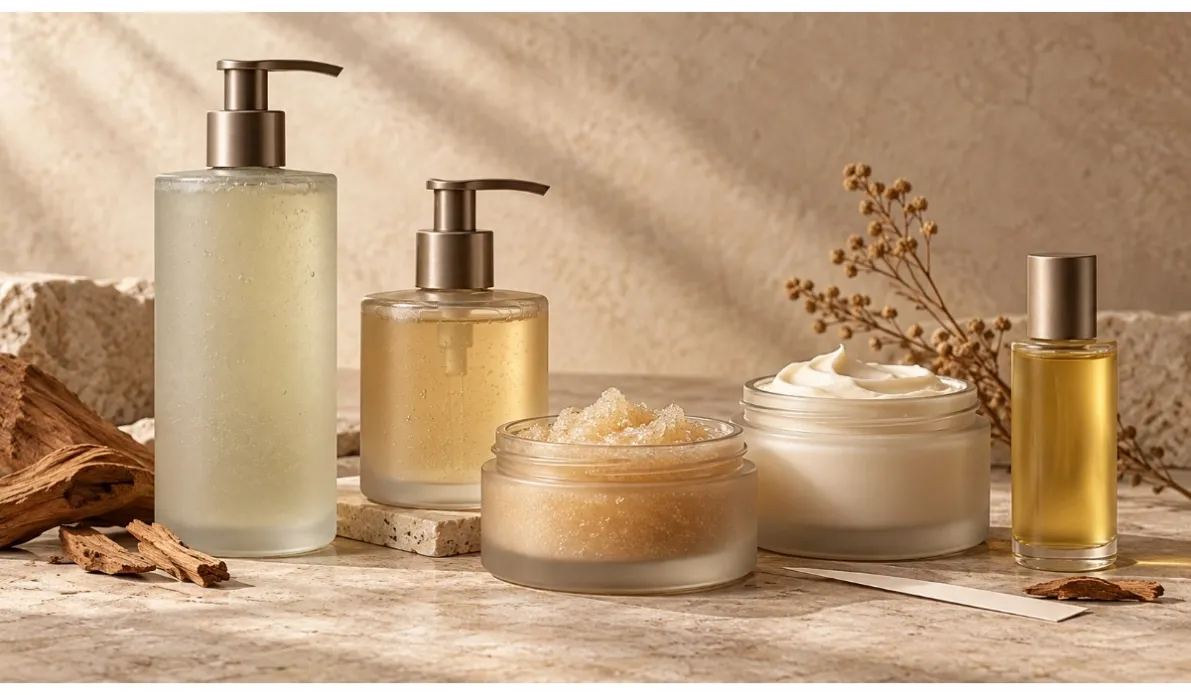
A recent body care project involved five products intended to share one recognizable fragrance identity:
- Body Wash
- Liquid Hand Soap
- Body Scrub
- Body Butter
- Body Oil
The buyer wanted the products to feel like one coordinated collection rather than five unrelated formulas. Using the same signature fragrance across the range appeared to be the most direct solution.
Technically, this is possible. However, using one fragrance does not mean adding it at the same dosage to every product.
Each formula affects how the fragrance smells in the package, develops during use and remains on the skin. The fragrance therefore needs to be evaluated separately in every product format.
One Fragrance Direction, Five Different Environments
The same fragrance concentrate can behave differently depending on the formula into which it is added.
Body Wash
Body wash is a rinse-off product. Its fragrance is experienced at several stages: when the bottle is opened, during lathering, while rinsing and briefly after showering.
The surfactant system can change the way certain fragrance notes are perceived. A fragrance that smells balanced in the concentrate may feel weaker, sharper or less complete after being introduced into the cleansing base.
The objective is not necessarily long-lasting fragrance. It is to create a pleasant scent during use without affecting cleansing performance, foam or formula stability.
Liquid Hand Soap
Liquid hand soap may be used many times throughout the day. Its fragrance should remain recognizable, but frequent use means that excessive intensity can become tiring.
The product also needs to be evaluated through the intended pump packaging. Fragrance performance in the bottle does not always represent the experience during handwashing.
Body Scrub
A scrub may contain oils, butters, exfoliating particles or emulsifying ingredients. These materials can influence fragrance diffusion.
A scent that appears strong when smelling the open jar may perform differently once the product is massaged onto wet skin and rinsed away. The base oils may also contribute their own natural odor, which needs to be considered during fragrance matching.
This is one reason we recommend evaluating the formula texture first. Our related case study explains why fragrance-free body polish samples may be tested before fragrance is added.
Body Butter
A body butter usually contains a richer combination of oils, waxes or conditioning materials. These ingredients may slow fragrance release and keep the scent closer to the skin for longer.
Because body butter remains on the skin, its fragrance level must be assessed together with the product’s richness, absorption and after-feel. A dosage that seems moderate in a rinse-off formula may feel much stronger in a leave-on butter.
Body Oil
Body oil provides direct and prolonged contact between the fragrance and the skin. The scent may bloom more noticeably during application and remain detectable for longer.
The final evaluation should also include product clarity, color, odor from the carrier oils and compatibility with the selected bottle, pump or dropper.
Why the Same Fragrance Dosage Should Not Be Copied Across Every Product
A fragrance percentage is not a universal setting.
Body wash, scrub, body butter and body oil are different formula systems. Even when they use the same fragrance concentrate, they may require different dosages to achieve a consistent consumer experience.
Copying one dosage across the entire range can result in:
- a body wash that smells too weak after rinsing;
- a hand soap that becomes too strong with frequent use;
- a body butter that overwhelms the intended skin-care experience;
- a body oil with excessive fragrance intensity;
- unexpected changes in formula color or viscosity;
- compatibility or stability concerns.
The goal is therefore not to make every product smell equally strong in the package. The goal is to make the collection feel connected throughout the consumer’s routine.
The Commercial Benefits of a Shared Signature Fragrance
When developed correctly, one signature fragrance can give a body care range a much clearer identity.
It can support:
- consistent brand recognition across several products;
- a fragrance-layering routine;
- coordinated product bundles and gift sets;
- simpler fragrance storytelling;
- easier merchandising across online and retail channels;
- future product extensions within the same collection.
However, fragrance alone is not enough to differentiate a product line. Texture, absorption, rinse-off performance, packaging and product positioning must also belong to the brand.
This principle is discussed further in our article on developing private label body care without copying competitors.
A Practical Development Sequence
For a multi-product fragrance collection, a controlled development sequence can reduce unnecessary sample revisions.
1. Define the fragrance brief
The buyer should describe the intended fragrance family, mood, customer and market position.
Instead of requesting only “a woody fragrance” or “a luxury scent,” it is more useful to clarify whether the direction should feel dry, creamy, warm, fresh, clean, resinous or understated.
Reference products can be used to explain preferences, but the final scent should have its own identity.
2. Select an anchor product
One product should be chosen as the main sensory reference for the collection. Depending on the concept, this may be the body butter, body oil or another core product.
The anchor sample helps the buyer and fragrance team agree on the main scent direction before adapting it to the remaining formulas.
3. Adjust the fragrance for each formula
The fragrance is then introduced into each base and evaluated at an appropriate level. The aim is to preserve the same fragrance identity while allowing for the way each formula releases and carries the scent.
4. Evaluate the fragrance during actual use
A scented product should not be approved only by smelling it in the container.
Evaluation should cover:
- scent in the bottle or jar;
- scent during application;
- performance with water for rinse-off products;
- scent on wet and dry skin;
- intensity several minutes after use;
- interaction with the base formula’s natural odor.
5. Approve every scented SKU separately
Approval of the body wash fragrance does not automatically approve the same fragrance in the body oil or body butter.
Each combination of formula and fragrance should have its own confirmed sample.
6. Complete stability and packaging reviews
The final scented formulas should be evaluated for relevant stability, color, odor, viscosity and packaging compatibility requirements before bulk production.
Documentation must also be prepared according to the formula, fragrance composition and intended sales market.
Does One Shared Fragrance Reduce the MOQ?
Not necessarily.
A body wash, body scrub, body butter and body oil remain separate products with different formulas and filling processes. Each product may therefore have its own production MOQ even when they share one fragrance.
In some cases, the purchase of the fragrance concentrate may be coordinated across the collection. Whether this is possible depends on the fragrance supplier, total fragrance requirement and production schedule.
Buyers should confirm both:
- the MOQ for each finished product; and
- the MOQ or minimum purchasing requirement for the customized fragrance.
A shared fragrance can simplify the collection concept, but it does not automatically turn several products into one production batch.
Information the Manufacturer Needs From the Buyer
Before fragrance sampling begins, the buyer should provide:
- the intended fragrance family and mood;
- target customer and sales market;
- desired intensity for each product;
- products included in the initial launch;
- target fill sizes;
- selected or preferred packaging;
- expected retail positioning;
- ingredient or fragrance restrictions;
- required regulatory documents;
- estimated order quantity for each SKU.
These details help the manufacturer determine whether one fragrance can be adapted efficiently across the proposed range.
Consistency Has to Be Designed
One signature fragrance can successfully connect an entire body care collection.
The important point is that consistency does not come from adding exactly the same percentage to every formula. It comes from adjusting the fragrance so that the body wash, hand soap, scrub, body butter and body oil deliver a coordinated experience in their own formats.
For brands developing a fragrance-led private label body care range, BEGO Beauty can support formula selection, custom fragrance development, packaging sourcing, sample evaluation and production planning.