Oct 21, 2026Success Stories / Case Studies
What to Comfirm Before Requesting a Cleansing Balm Sample
Before requesting a private label cleansing balm sample, confirm formula type, melting texture, emulsification, rinse-off feel, ingredients, packaging and order quantity.
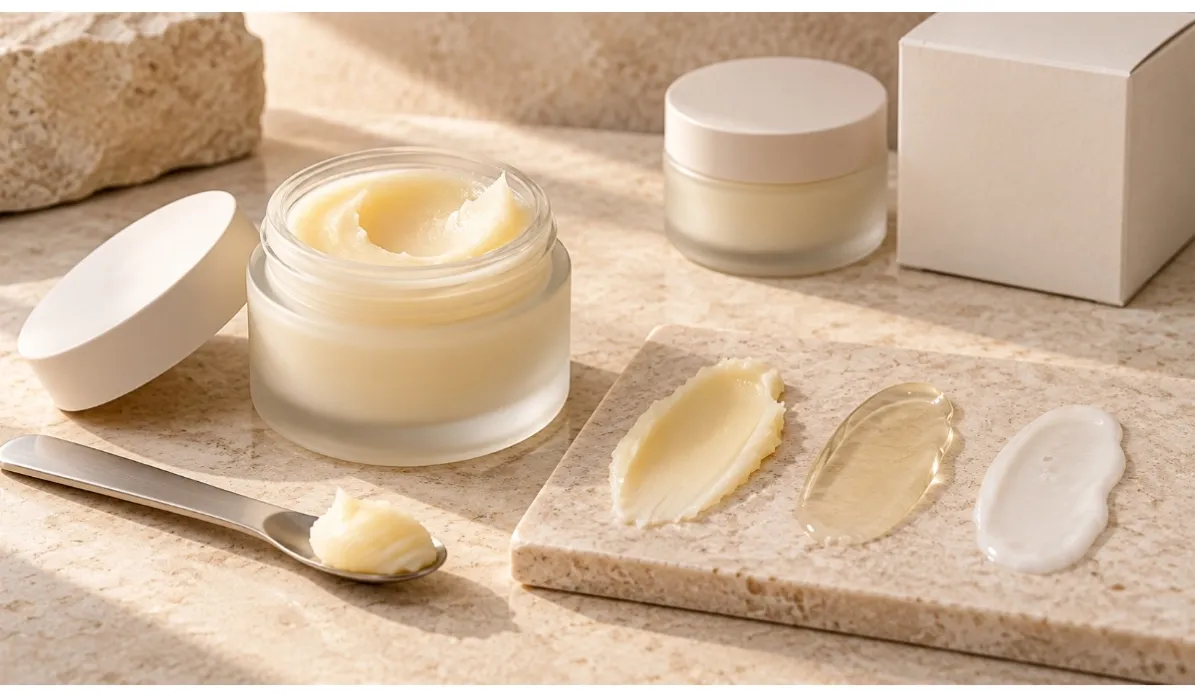
A recent inquiry came from a buyer interested in developing a private label cleansing balm.
The initial request was straightforward: the buyer wanted to know whether the product could be supplied under their own brand.
The answer was yes. However, before preparing samples or calculating a meaningful quotation, several product details still needed to be clarified.
A cleansing balm is not defined only by its ingredient list. Its performance depends on how it melts, removes makeup, reacts with water, rinses from the skin and feels afterward.
Before requesting samples, the buyer should therefore confirm what type of cleansing experience the brand wants to create.
1. Existing Formula or Custom Formula?
The first decision is whether to begin with an existing, market-tested formula or develop a customized formula.
Existing formula
An existing formula is usually the more efficient starting point when the buyer wants to:
- review a mature product quickly;
- reduce development time;
- work with a more established texture;
- avoid unnecessary formulation changes;
- launch with a more controlled initial budget.
The sample still needs to be evaluated. “Existing formula” does not mean the product should be approved without testing.
The buyer may still need to confirm fragrance, color, packaging, branding and market-specific documentation.
Custom formula
Custom development may be more appropriate when the brand requires:
- specific oils, butters or botanical ingredients;
- a particular melting speed;
- a lighter or richer after-feel;
- fragrance-free positioning;
- ingredient exclusions;
- a distinctive color or sensory identity;
- stronger differentiation from existing products.
Customizing one or two meaningful characteristics is usually more efficient than replacing the entire formula without a clear product objective.
Our guide to stock formulas versus custom formulations explains how the two routes affect cost, development time, MOQ and differentiation.
2. What Should the Balm Do During Use?
“Cleansing balm” describes a product category, but not the complete consumer experience.
Two cleansing balms can have very different textures and rinse-off characteristics.
Before sampling, the buyer should describe the intended performance:
- Should the balm feel firm or soft in the jar?
- How quickly should it melt when massaged?
- Should it become a light oil or remain more cushiony?
- Does the buyer expect it to remove long-wear makeup?
- Should it emulsify visibly when water is added?
- Should it rinse very cleanly or leave a conditioned finish?
- Is a slight protective film acceptable?
- Should the final skin feel be fresh, soft or nourished?
These descriptions are more useful to the laboratory than simply requesting “a premium cleansing balm.”
BEGO Beauty’s current private label waterless cleansing balm provides an existing starting direction based on a solid-to-oil, anhydrous cleansing format.
3. Define the Transformation Clearly
The transformation during use is one of the most important parts of a cleansing balm.
A typical use sequence may be:
Solid balm → melted oil → contact with water → emulsified rinse
The buyer should evaluate every stage.
In the jar
Check whether the balm is:
- smooth and uniform;
- too hard to remove;
- too soft at room temperature;
- grainy or uneven;
- visually suitable for the intended positioning.
During massage
Check:
- how quickly it melts;
- whether it spreads easily;
- whether there is enough slip;
- whether it drags on the skin;
- how well it lifts makeup and sunscreen.
After adding water
Check:
- whether emulsification is clear;
- whether the product turns milky;
- how easily it moves with water;
- whether additional massage is needed;
- whether oily residue remains after rinsing.
After rinsing
Evaluate whether the skin feels:
- clean;
- soft;
- conditioned;
- oily;
- coated;
- tight or dry.
A buyer may want strong cleansing and a nourishing finish, but these requirements still need to be balanced. Increasing the rich oil phase may improve after-feel while also making the product harder to rinse cleanly.
A related anhydrous-formula case explains why a buyer should define transformation, rinse-off and after-feel before approving a body polish sample. The same controlled evaluation principle also applies to cleansing balms.
4. Do Not Begin With an Unfocused Ingredient List
Buyers often start a custom skincare inquiry by listing many preferred ingredients.
Ingredient direction is important, but every requested ingredient should have a clear purpose.
For a cleansing balm, the manufacturer needs to understand:
- which ingredients are essential to the product story;
- which ingredients are optional;
- whether there are prohibited ingredients;
- whether the product should be fragrance-free;
- whether naturally scented raw materials are acceptable;
- whether the buyer has vegan or other formulation requirements;
- which market the product will be sold in.
Different oils, butters and waxes can influence texture, color, natural odor, melting behavior and stability.
Adding more ingredients does not automatically produce a better cleansing balm. The formula must still cleanse effectively, remain stable and deliver the intended rinse-off experience.
5. Fragrance Should Be Confirmed Separately
A fragrance can make a cleansing balm feel more sensorial, but it can also affect the buyer’s evaluation of the formula.
A pleasant scent may make one sample feel more luxurious even if another version has better cleansing and rinse-off performance.
Before adding fragrance, the buyer should decide:
- fragrance-free or scented;
- preferred fragrance family;
- desired intensity;
- ingredients or allergens to avoid;
- target market requirements.
When the texture and rinse-off performance are still being evaluated, a fragrance-free first sample may provide a more objective comparison.
Fragrance can be introduced after the preferred formula direction is selected.
6. Confirm the Intended Fill Size
The sample formula can be prepared before the retail size is finalized, but an accurate production quotation cannot.
The buyer should indicate whether the intended product is closer to:
- a compact travel or trial size;
- a standard retail cleansing balm;
- a larger professional or value size.
Possible capacities such as 50 g or 100 g may require different jars, cartons, filling arrangements and cost calculations.
The fill size also affects:
- expected retail price;
- product consumption;
- packaging dimensions;
- shipping weight;
- unit cost;
- packaging MOQ.
The manufacturer should therefore quote the complete configuration rather than giving one general price for “a cleansing balm.”
7. Select Packaging According to the Formula
Most cleansing balms are better suited to wide-mouth jars because the consumer needs to remove the product with fingers or a spatula.
The packaging review should cover:
- jar material;
- jar capacity;
- opening diameter;
- inner lid or sealing liner;
- closure tightness;
- spatula requirement;
- resistance to oil contact;
- leakage during transportation;
- compatibility with the filling process;
- label or direct-printing area;
- individual carton requirements.
The formula and packaging should be tested together. A jar selected only for appearance may not provide the required seal, filling performance or protection.
Our skincare packaging approval checklist explains what buyers should verify before approving a jar, closure, printing and outer box.
8. Understand What the First Sample Represents
The first formula sample may be supplied in a laboratory sample container rather than the final customized retail jar.
Its purpose is normally to evaluate:
- formula texture;
- melting behavior;
- cleansing performance;
- emulsification;
- rinse-off;
- after-feel;
- fragrance direction.
It may not yet represent:
- final jar color;
- printed logo;
- retail carton;
- complete decoration;
- final production unit cost.
This distinction should be clear before the sample is shipped.
Our general guide on what to confirm before ordering skincare samples explains the difference between a formula sample, packaging sample and final reference sample.
9. Use a Consistent Sample Test
The buyer should test the cleansing balm under repeatable conditions.
A practical evaluation can include:
- Use a consistent amount of product.
- Apply it to dry skin.
- Massage for a similar length of time.
- Test it against the same makeup or sunscreen products.
- Add a consistent amount of water.
- Observe the emulsification.
- Rinse using the same method.
- Check the immediate skin feel.
- Check the skin again after several minutes.
Useful feedback might include:
- melts well but feels slightly too heavy;
- removes foundation effectively but needs better waterproof-makeup removal;
- emulsifies clearly but takes too long to rinse;
- rinses cleanly but needs a softer after-feel;
- texture is suitable, but the fragrance is too strong;
- balm is too soft at the expected room temperature.
Comments such as “not good” or “make it more luxurious” are difficult for the laboratory to translate into a precise adjustment.
More guidance on useful formulation feedback is available in Why Do Skincare Samples Keep Getting Revised?.
10. Confirm Sample Cost and International Shipping
Sample policies should be clarified before development begins.
For this inquiry, an existing or initial formula sample could be provided without a separate sample charge. The buyer would be responsible for the international express cost from China to the destination country.
This arrangement allows the buyer to evaluate the formula before committing to bulk production, while keeping the logistics responsibility clear.
Custom development, repeated revisions, specialized raw materials, final packaging samples or third-party testing may follow different cost arrangements depending on the project.
11. MOQ and Price Depend on the Final Configuration
The manufacturer should not confirm a final MOQ or unit price based only on the product name.
The quotation depends on:
- existing or custom formula;
- requested ingredients;
- fill size;
- jar selection;
- logo method;
- outer box;
- estimated order quantity;
- testing and documentation;
- target market;
- shipping requirements.
A mature formula with standard packaging may support a more flexible launch than a fully customized formula combined with a specially colored jar and printed carton.
Our guide to launching a private label cosmetics line with a lower MOQ explains how standard packaging and controlled customization can reduce initial inventory pressure.
Information to Send the Manufacturer
Before requesting a private label cleansing balm sample, prepare:
- existing or custom formula preference;
- target benefits;
- required key ingredients;
- prohibited ingredients;
- preferred texture;
- expected makeup-removal performance;
- desired emulsification and rinse-off;
- preferred after-feel;
- fragrance preference;
- target fill size;
- packaging direction;
- estimated order quantity;
- target market;
- expected retail positioning;
- desired launch date.
These details allow the manufacturer to prepare a more relevant sample and provide a quotation based on the product the buyer actually intends to launch.
Start With the Cleansing Experience
A successful cleansing balm project should not begin with the jar color or a long ingredient list.
It should begin with the experience the product needs to deliver:
How it scoops → how it melts → how it cleanses → how it emulsifies → how it rinses → how the skin feels
Once that performance direction is clear, ingredients, fragrance, packaging, MOQ and pricing can be evaluated much more efficiently.
BEGO Beauty supports private label and custom cleansing balm projects, including existing formulas, custom formulation, formula samples, jar sourcing, logo customization, cartons and bulk production.