
Sep 20, 2026Business & OEM Insights
Before Granting Country Exclusivity: What Cosmetic OEM Manufacturers Evaluate
Learn what cosmetic OEM manufacturers evaluate before granting country exclusivity, from product scope and sales targets to compliance, payment and market plans.
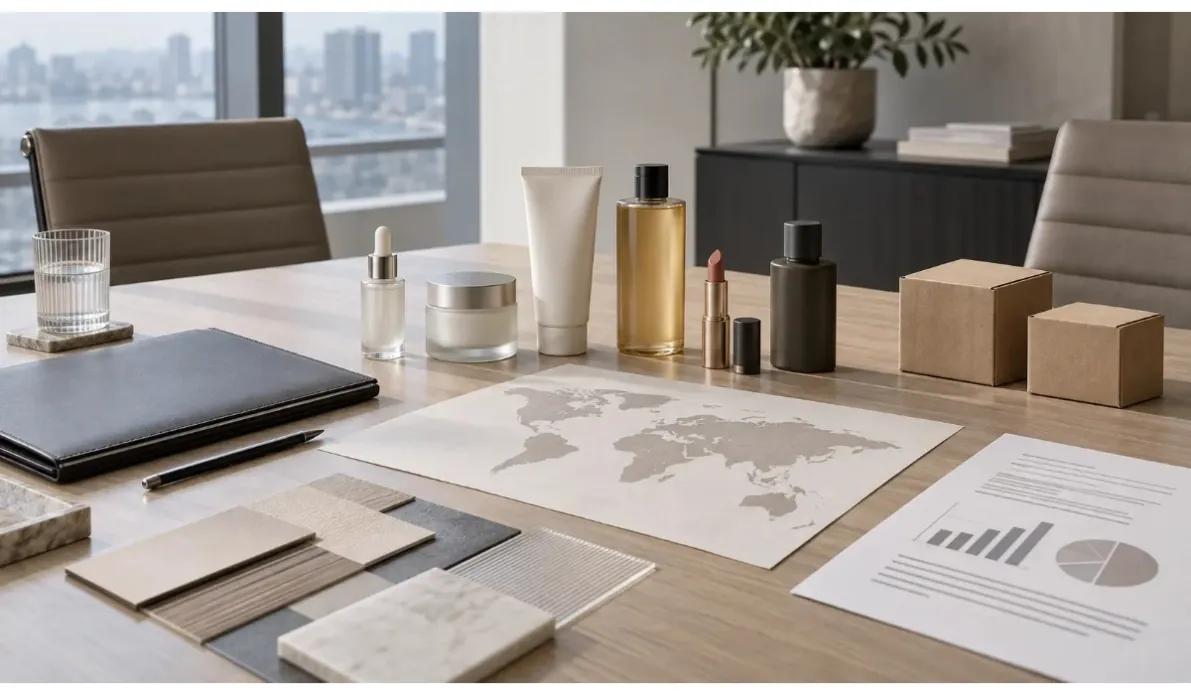
We recently received an inquiry from an international company seeking a long-term cosmetics manufacturing and exclusive distribution partnership.
The proposed product scope was broad: skincare, hair care, body care, color cosmetics and men's care. The company also asked about ready formulas, custom development, local filling, regulatory documents, payment terms and country exclusivity.
This type of inquiry can represent a valuable opportunity. It also raises an important question:
What does a cosmetic OEM manufacturer need to evaluate before offering exclusive rights for an entire market?
Exclusivity Is More Than a First Order
A normal OEM order is based on defined products, quantities, specifications and payment terms. Country exclusivity is a longer commitment.
It may limit the manufacturer's ability to work with other customers in that territory. The decision therefore cannot be based only on an introduction, a large product wish list or a proposed first order.
A serious exclusivity discussion normally requires:
- a realistic annual purchasing target;
- a defined product launch plan;
- evidence of local sales channels;
- marketing and registration capabilities;
- agreed payment and delivery terms;
- measurable performance milestones.
The purpose is not to make the process difficult. It is to make sure both parties are investing in a partnership that can actually grow.
Start With a Focused Product Plan
An inquiry may request dozens of categories, but launching an extensive range of skincare and color cosmetic products at the same time can create unnecessary cost and complexity.
A stronger starting plan identifies:
- the first three to five priority SKUs;
- the target retail customer and price level;
- expected order quantity per SKU;
- preferred ready formula or custom-formula route;
- packaging and language requirements;
- the intended launch schedule.
This information allows the factory to recommend suitable formulas, calculate a meaningful quotation and check whether the packaging MOQ matches the launch quantity. When custom packaging requires a larger order than the first filling quantity, a staged inventory plan may help. Our custom aluminum hand cream tube MOQ case study shows one practical example.
It also shows whether the distributor has a market-entry strategy rather than a general interest in the full catalogue.
Ready Formulas and Custom Formulas Need Different Timelines
For an initial launch, market-tested ready formulas can reduce development time and cost. Through our private label cosmetics OEM/ODM services, the brand can still customize fragrance, color or texture within an approved range, together with packaging and artwork.
Exclusive custom formulas involve more R&D work, testing and approval stages. They may also require higher order volumes or a development fee.
Before quoting, the manufacturer needs to know which products can use existing bases and which require genuine formula development. Without this distinction, one price list cannot accurately represent the full project.
Compliance Must Be Confirmed for the Destination Market
The documents requested in an international inquiry may include ISO or GMP information, ingredient lists, COAs, SDS documents, allergen statements, stability or microbiological test reports, and product information files.
Not every document applies to every formula or every country. Responsibilities also differ: the factory supplies manufacturing and product documentation, while the importer or responsible local party may need to complete registration, label review and local compliance steps.
For this reason, the destination, import route, product category and local regulatory requirements should be confirmed before samples or commercial production begin.
Payment and Logistics Are Part of the Evaluation
Requests for EXW, FOB, CFR or CIF terms, letters of credit, open-account terms or extended credit should be reviewed together with the destination and order value.
New partnerships normally begin with terms that allow both sides to establish a successful transaction history. Longer credit periods may be considered later, subject to commercial history, credit review and appropriate safeguards.
The same caution applies to local filling, bulk supply, technology transfer or a future joint venture. These are separate business models with different responsibilities and should be evaluated after the initial cooperation proves workable.
A Practical Path Toward Exclusivity
Instead of granting permanent country exclusivity immediately, a phased structure can protect both parties:
Stage | Practical Goal |
|---|---|
Qualification | Verify the company, market channels, product priorities and compliance plan |
Pilot order | Test communication, product acceptance, payment and logistics |
Launch period | Measure registrations, sell-through and reorder performance |
Conditional exclusivity | Agree on territory, channels, annual minimums and review dates |
Renewal | Continue protection when agreed targets and obligations are met |
The agreement should clearly define the territory, covered products, excluded channels, sales targets, pricing principles, trademark use, confidentiality, reporting, termination and post-termination handling.
What Distributors Should Prepare
Companies seeking an exclusive private-label or OEM partnership can speed up evaluation by providing:
- company registration and ownership information;
- current brands and distribution references;
- sales channels and geographic coverage;
- three to five priority products;
- forecast quantity per SKU and annual target;
- target prices and positioning;
- local registration and labeling plan;
- preferred payment and shipping terms;
- a launch and marketing timetable.
The more specific the proposal, the more specific the manufacturer's response can be.
Long-Term Partnerships Begin With a Verifiable First Step
A broad vision is valuable, but country exclusivity should be built on performance, transparency and a workable first project.
For many partnerships, the best route is to begin with a focused product range, confirm the regulatory and commercial process, complete a pilot order and then negotiate conditional exclusivity based on real results.
If your company is looking for a private-label skincare or cosmetics manufacturing partner, contact BEGO Beauty with your priority products, target market, estimated quantities and distribution plan. Our team can evaluate the most practical starting route for your project.