
Sep 18, 2026Success Stories / Case Studies
Why Custom Aluminum Hand Cream Tubes Often Require a 10,000-Piece MOQ
Want to launch 2,000–3,000 luxury hand creams per scent but face a 10,000-piece tube MOQ? See how staged filling and packaging inventory can make it workable.
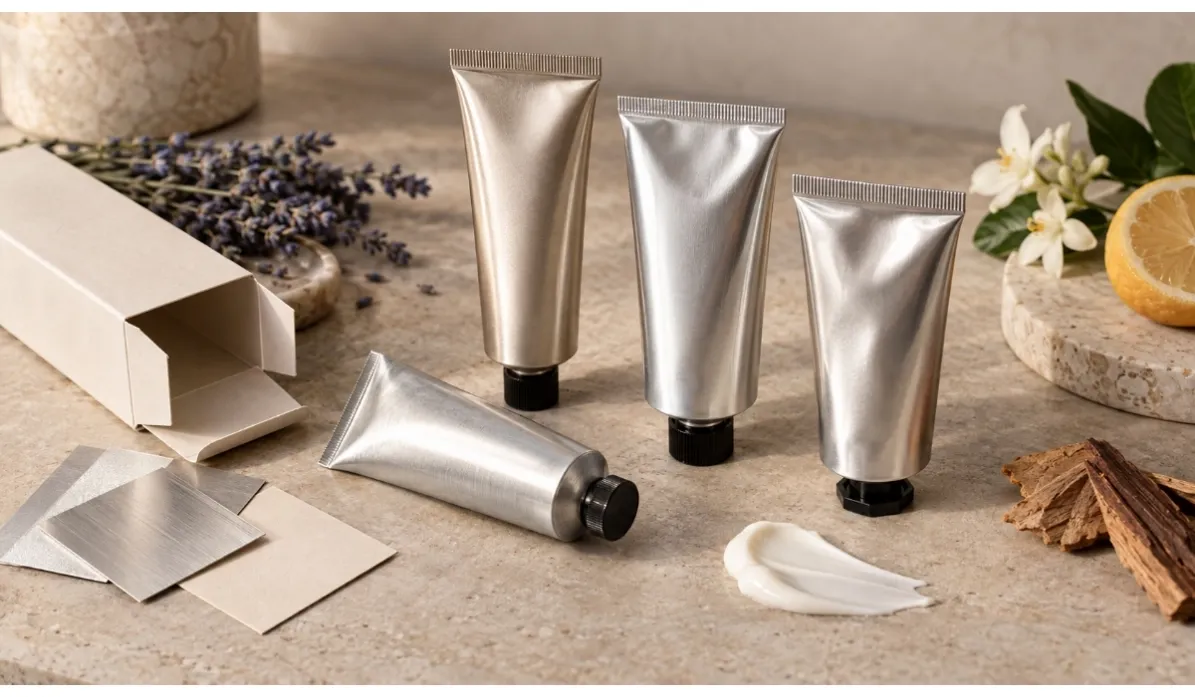
A travel brand recently approached us with a clear launch concept: three scented hand creams designed for customers on the move.
The planned first order was commercially sensible for a new product line:
- Three custom fragrances
- Approximately 2,000-3,000 units per fragrance
- A portable 30–50 ml format
- One proven premium moisturizing base
- Custom tube colors and printing
- Individual folding cartons
The formula was not the difficult part. We could use one existing hand cream base with a rich, velvety skin feel, then produce it in three fragrance versions. The real challenge was the packaging.
The brand did not want an ordinary plastic cosmetic tube. It wanted the traditional look and tactile quality of a luxury hand cream tube—either full aluminum or an aluminum-barrier laminate such as ABL—with custom color and printing.
That packaging choice changed the MOQ calculation.
The Product MOQ and Packaging MOQ Are Not Always the Same
For many private-label projects, buyers first ask how many finished products a factory can fill. However, the filling quantity is only one part of the order.
A finished hand cream includes several independently sourced components:
- Bulk cream
- Fragrance
- Primary tube
- Cap
- Printed folding carton
- Labels, inserts or seals when required
In this case, producing 2,000–3,000 units per fragrance was workable from the formulation and filling side. The custom aluminum tube was the limiting component.
Our packaging supplier requires 10,000 pieces for the requested custom tube color and printing. Below that quantity, the production setup is not efficient enough. Tube forming, surface treatment, color adjustment, printing setup and machine cleaning all create fixed costs before the first usable tube is produced.
This does not mean a small brand must order 10,000 finished hand creams at once. It means the packaging plan needs to be separated from the filling plan.
A Practical Solution: Produce the Tubes Once and Fill in Batches
After reviewing the project, we proposed a staged production model.
The brand can manufacture the required 10,000 custom tubes in one packaging run, but release the finished hand creams in smaller batches.
For the first order, the payment would cover:
- The full production cost of 10,000 custom tubes
- The cream, fragrance, filling, assembly and cartons required for the first finished-product batch
The unused empty tubes would then be stored for later repeat orders. When the brand is ready for the second batch, it would pay only for the new filling quantity, fragrance, cartons, assembly and other applicable production costs because the primary tubes have already been manufactured.
This approach can help a brand preserve its intended premium packaging while avoiding the inventory pressure of receiving 10,000 finished products immediately.
Can Three Fragrances Use the Same Hand Cream Base?
Yes, in many projects the three fragrances can share one proven base formula. The bulk base can be prepared consistently and then divided into separate batches for fragrance addition and filling.
This has several advantages:
- A consistent texture and moisturizing performance across the collection
- Less formulation development than creating three creams from zero
- Easier product positioning as one collection
- More efficient sampling and scale-up
However, each fragrance still needs a compatibility and stability review in the selected formula and tube. Fragrance oils can affect odor, color and sometimes the behavior of a formula over time. The final packaging material, inner coating or barrier layer must also be considered before bulk production.
For this reason, we recommend developing samples of all three scented versions in the proposed packaging before confirming the production order.
Full Aluminum or Aluminum-Barrier Laminate?
Both formats can create a premium appearance, but they do not behave in exactly the same way.
Full aluminum tubes offer the classic apothecary-style hand cream appearance. They develop creases as the product is used, which some luxury brands consider part of the experience. The internal lacquer and formula compatibility must be confirmed.
Aluminum-barrier laminate tubes, such as ABL structures, can provide a similar metallic visual direction while offering a more controlled tube shape and different decoration possibilities. Their feel, resilience and minimum order requirements depend on the exact structure and supplier.
Rather than choosing from photos alone, buyers should compare physical samples for:
- Surface feel and perceived quality
- Recovery or creasing after squeezing
- Print sharpness and color accuracy
- Foil stamping and decorative options
- Cap fit and dispensing experience
- Formula compatibility
- Durability during transport
The best choice is not automatically the most expensive tube. It is the format that supports the brand image, formula and realistic launch volume at the same time.
Before Paying for 10,000 Tubes, Confirm These Details
The staged-inventory model is useful, but both parties should agree on the operational details before production begins.
The purchase agreement should confirm:
- Whether the 10,000-piece MOQ applies per tube design or to one shared design
- Whether all three fragrances will use the same tube artwork
- How each fragrance will be distinguished—tube color, carton, label or fragrance name
- The quantity of tubes used in the first filling batch
- The number of unused tubes remaining after each production run
- Storage period and storage conditions
- Responsibility for damage, aging or artwork changes during storage
- Whether future carton designs have separate MOQs
- What happens if the brand changes its logo, color or tube specification
One cost-saving option may be to use the same custom tube across all three fragrances and differentiate the scents through the folding cartons or a smaller variable print area. Whether this is possible depends on the brand design and the decoration method selected.
What We Would Sample First
For a project like this, we would not begin with 10,000 printed tubes immediately. A sensible development sequence is:
- Select the existing premium hand cream base.
- Confirm the three fragrance directions.
- Prepare scented formula samples for evaluation.
- Review available stock samples of full aluminum and aluminum-barrier laminate tubes.
- Confirm the preferred tube structure, size, cap and decoration.
- Conduct the necessary formula and packaging compatibility checks.
- Approve the artwork and a pre-production packaging sample.
- Produce the custom tube quantity, then fill the first launch batch.
This sequence helps the buyer evaluate the formula, fragrance and physical packaging before committing to the full custom packaging run.
A High Packaging MOQ Does Not Always Mean a High First Finished-Product Order
For premium travel-size products, packaging can determine the commercial feasibility of the entire project. A factory may be able to fill 500 units, while a custom component supplier requires 10,000 pieces.
The important question is not simply, “Can you reduce the MOQ?” It is:
How can the packaging MOQ be structured so the brand can launch at a manageable finished-product quantity without giving up the intended premium presentation?
Producing the custom tubes once and using them across planned repeat orders can be a workable solution—provided that the fragrance collection, artwork, storage terms and future demand have been carefully evaluated.
If you are developing a private-label hand cream collection, share your target tube material, capacity, decoration, number of fragrances and first-order quantity with us. We can assess the formula MOQ and packaging MOQ separately, then recommend a sampling and production plan based on the actual constraints of the project.